

Claudia Jane Scroccaro - Pensionnaire de la Villa Médicis (2024-2025)
© Ircam-Centre Pompidou
On the occasion of International Women’s Rights Day on 8 March, we present a series of in-depth interviews with women working at Ircam. Claudia Jane Scroccaro, a composer, music computing designer and teacher within Ircam’s Composition Cursus, shares her journey as a woman wearing multiple hats in a field often regarded as predominantly male. She speaks about her experiences, her observations, and her hopes for the future of musical creation.
Throughout your career, it appears that many of your teachers were male composers. Could you tell us about your experience as a woman, first as a student and then as a composer?
In order to become a composer, it is customary to begin with instrumental training. In my case, this was the piano. I was very young when I started studying conducting, and it was a profession in which there were quite few women. Many of my teachers and peers were indeed men, but the presence of a female student was not something entirely new for everyone either, so I did not feel that my gender was particularly an issue. In an academic context, one is in a way “protected” by the established hierarchy between teachers and students. Everyone has their role, and for my part I did not suffer too much from discrimination, even though I know that this was not the case for many other women.
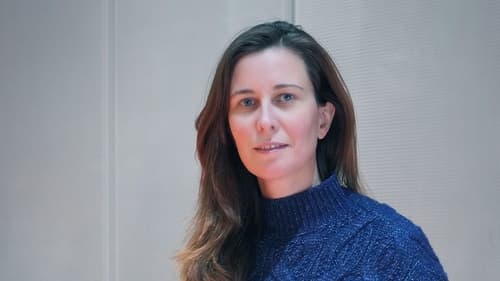 La compositrice Claudia Jane Scroccaro © Ircam-Centre Pompidou
Things became more complicated when I had to put on the role of orchestra conductor, as this position involves leading a large group of people. In a professional context, dynamics change, and this transition is very difficult, both for men and for women, also because of strong competition. I experienced more discrimination when I turned towards electronic composition. I knew that it was my preferred field, but I had to leave the dedicated programme at the Rome Conservatory because I was made to feel that I was not “legitimate” there. In this type of training, there is a lot of technical work, stage work, and it also requires physical strength. As a result, the presence of a woman is perceived as something exceptional. I remember one occasion when, with my class, we had the opportunity to take part in organising an electronic music festival. It was interesting because it allowed us to professionalise ourselves through the implementation of concrete projects. But the problem was that all the female students — that is, 3 out of 10 people — ended up in secretarial roles. When I finally had the opportunity to become involved from an artistic point of view, I received comments from certain artistic directors and teachers about my “character”. My personality was criticised rather than my work, which never happened to my male counterparts. There is a kind of legitimacy in making this sort of remark to women. This was only 10 years ago, so not that long ago, even if I think that, depending on the country, the way women are treated varies greatly.
This testimony is quite representative of the gender stereotypes associated with women!
Except that, because I was convinced that I had found my path, I refused to let these very important moments of my career be ruined. I therefore left Italy to attend Marco Stroppa’s classes in Germany. The male/female ratio there fluctuated completely from one year to the next, and with him I truly had the impression that gender mattered little, that it was purely a question of skills. As a teacher, this is something I try to apply in turn. Moreover, talking about a male/female divide is rather reductive today, as we must also take non-binary people into account. But the lack of women in computing, particularly musical computing, remains a real problem: even if it is not explicitly stated, there are specific expectations placed on women. As a woman, I feel that I am not allowed to make mistakes, because if I do, it will unfortunately validate certain prejudices. Personally, I think that professionalism is rather about knowing how to deal with one’s mistakes! At IRCAM, I am the first and only RIMCE (RIM in charge of teaching), and I have no intention of being the last!
What has been done within the Cursus to try to improve gender balance?
The first time I was part of a jury selecting candidates for the Cursus, I quickly realised that there were not enough female applicants. In that context, how can parity be respected? By imposing quotas, we risked doing a disservice to certain female composers who may not yet have the required maturity.
“What we decided to put in place was, in particular, to change certain recruitment criteria and to make the wording of the call for applications more inclusive.”

Claudia Jane Scroccaro
Compositrice et pédagogue
What we decided to put in place was, in particular, to change certain recruitment criteria and to make the wording of the call for applications more inclusive. Having myself not followed a linear academic path — because becoming a composer, especially of electronic music, is long and difficult — I think it is necessary to allow artists time to train. We tend, in general, to have more interesting profiles with older candidates. I also know many women who start their careers late, out of fear of failure or because of a feeling of illegitimacy. I myself waited until the very last moment to apply; it was my final chance! These are therefore initial measures, a “work in progress” as they say, but ones that open the door to change. Efforts are also being made by the Pedagogy Department in recruiting guest composers, notably with the presence of Eva Reiter for the 2026/27 Cursus. I think it is essential that teaching teams give resonance to these issues of parity.
How did you come to work as a RIMCE, and what is your role?
As a RIMCE, my role is different from that of the RIMs. The RIMs support composers in their projects and take care of the entire electronic component, whereas RIMCEs, like me, are teachers who accompany young composers in the pedagogical sense of the term. I was recruited because, having just completed the Ircam Cursus, I was very familiar with all the software, and my field of expertise — computer-assisted composition — was close to that of Mikhail Malt, my predecessor. I had also taught for a year in Stuttgart before coming to work at Ircam. Things therefore moved very quickly; the institute decided to place its trust in me even though I did not feel perfectly trained — a feeling of illegitimacy that is unfortunately very widespread among women! Moreover, I have a rather particular status, since not only do I teach, but I am also a composer producing my own work at Ircam. This dual role can be difficult to carry, because depending on my position — whether I am acting as a colleague or as the head of a project — I have to interact differently with the same people. In some cases, this can complicate relationships, and it is not always easy to know the reason behind certain behaviours: is it because I am a woman, or because of this change of role?
Over the three years you have taught at Ircam, have you noticed changes in the way students approach musical creation from one cohort to another?
Each cohort is completely different. This is also a deliberate intention of the jury at the time of selection. Collectively, we try to ask ourselves what we are looking for; having new challenges every year is stimulating. What I observe in the new generation of composers is that they are far more demanding in terms of electronic music. This is due in particular to changing habits; today we listen to more music with electronics than purely acoustic music. The negative consequence is that we expect to find the same types of sounds over and over again, and we do not necessarily know how to detect non-“natural” elements in a sound. I think that being trained only in the digital domain without having real acoustic experience can hinder the development of imagination, because one waits for responses rather than projecting ideas. Most computer tools for musical creation are now generative, and the role of composers will be to work with this material. As far as musical approach is concerned, I think it depends on many factors — including our individual sensitivity — that go beyond gender, but I do not yet necessarily have enough distance to analyse everything. What I mainly observe, and find very positive, is a change in the teacher–student dynamic.
“We are moving away from a very directive teaching model towards a more collaborative one, where students learn a great deal from one another.”
Claudia Jane Scroccaro
Compositrice et pédagogue
We are moving away from a very directive teaching model towards a more collaborative one, where students learn a great deal from one another. This is partly explained by easier access to information, which means that even highly specialised fields such as electronic music are becoming more democratised. It even happens at times that students know more than we do on certain topics! The question we must ask ourselves as teachers is what approach to adopt in the face of these developments. There are practices to be put in place in order to encourage these exchanges, which are very beneficial, especially in computing, while still managing to channel them. These changes in dynamics are also observed in the RIM/composer relationship, where RIMs become more than simple technical assistants. Real collaborations are formed, exchanges of artistic visions, because ultimately nothing can be reduced to technique alone.
So this is a rather positive message, seeing that relational dynamics are evolving at all levels. Rather than establishing quotas and regulations, would it therefore be a matter of fostering equality of opportunity?
It is complicated, because issues of parity create resentment between genders, and I do not know whether enforcing quotas is the right solution. That said, we must absolutely not turn a blind eye to discriminatory behaviour! Some conservatory teachers still refuse to admit women; that must be condemned. But there is also “normalised” sexism, which is harder to identify because it is more insidious. I have already suffered from “mansplaining”, where men explained my own work to me. The problem is that these are not necessarily openly misogynistic people; it is more internalised than that. Exhausting in the long run!
And with regard to higher education, what measures should be prioritised in order to guarantee better parity?
Ideally, the same level of expectation should apply regardless of the student’s gender, background or experience, while trying to eliminate biases. The measures we have taken are a first step; now we have to wait and see their impact. Unfortunately, there is no strategy or magic formula. Opening up a debate to find solutions is already important. This is work that also needs to be done outside Ircam. As I travel a great deal and am invited to conservatories or masterclasses, I take the opportunity to talk about our programmes. I act as a spokesperson for these reflections and encourage the female composers I meet to embark on their projects and to apply if they are hesitating. Sometimes it is also simply a matter of providing tools, guiding them towards certain resources…
Finally, what message or advice would you like to address to women who would like to engage in musical composition?
Not easy! The advice I could give is to surround yourselves well. Turn away from people who do not wish you well, and instead seek out those who support you. Ignoring harmful people is all the more difficult when there is a notion of hierarchy, such as in a teacher–student or leader–assistant relationship. Nevertheless, I do not think this is limited to sexist behaviour, and it can come from anyone, male or female. One must then have the courage to trust oneself, while being careful to distinguish negative remarks from constructive criticism. I stopped questioning my skills some time ago because I now know what I am capable of. If I had stopped because of the criticisms I received, I would not be where I am today. So if my story, which is quite a positive one, can encourage vocations, that is a very good thing!
Listen to Claudia Jane Scroccaro

I sing the body electric (2020)
by Claudia Jane Scroccaro, recorded in 2022
0:00 / 3:00
Claudia Jane Scroccaro
Compositrice et pédagogue


